Curves, Downhills, and Panic Braking
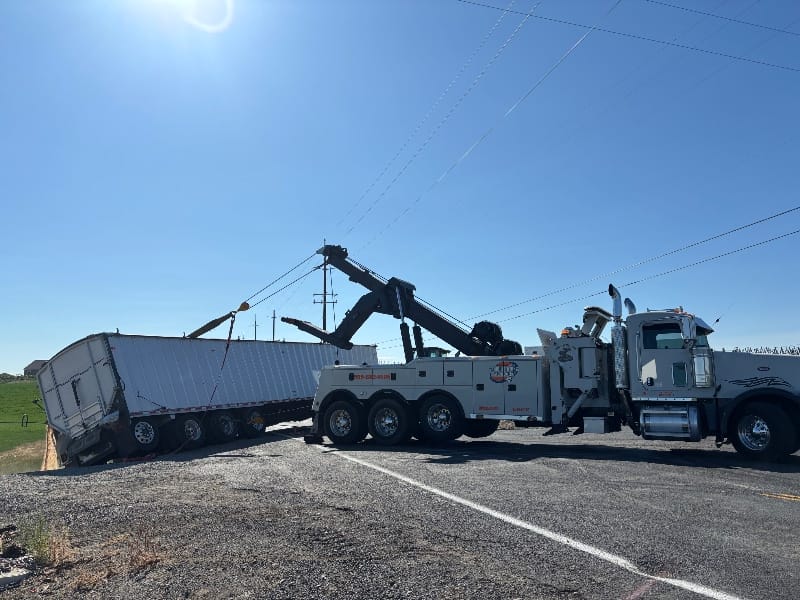
Before a jackknife, the road usually gives a few quiet hints. The pavement shines like dark glass, spray hangs behind the wheels, and the wind tugs at the trailer like it wants to step it sideways. In the mirrors, everything looks normal until it doesn’t. Then, all of a sudden it happens: the trailer loses grip and swings, and the tractor can’t stay lined up with it. A jackknife can start as a tiny wiggle in the mirrors, then turn into a broad sideways sweep across the lane. They can happen fast, especially during hard braking or a sudden change in speed, and it gets worse when weight shifts forward and the trailer keeps pushing like a heavy hand on your back bumper. The moment tires stop gripping, the trailer can start steering the whole rig. This situation usually ends with an I-82 semi towing call coming in.
When the Trailer Starts Pushing the Tractor
Braking, speed, and road texture collide
A jackknife often starts with braking that’s too sharp for the available traction, then the trailer’s momentum keeps moving forward. Wet pavement, ice, packed snow, gravel, and polished ruts can cut traction more than drivers expect, even at a speed that felt fine a minute earlier. We also notice that empty or lightly loaded trailers can break loose sooner because they don’t press the tires into the road as firmly.
Practical Prevention Truckers Can Use Every Shift
Set up your stop before you need it
We like to think in terms of “braking budget,” because every road surface gives you a different limit. Leaving extra following distance buys time to slow down gradually, and gradual braking helps keep the trailer behind you instead of beside you. If you feel the rig start to drift out of line, easing off the brake and re-centering smoothly can help you regain control, as long as traffic and conditions allow it.
Small habits that reduce jackknife risk
Our I-82 semi towing team has found that the best prevention usually looks boring from the outside, and that’s a good thing. Here are habits we encourage drivers to practice because they stack the odds in your favor:
- Slow down before curves, ramps, and downhill stretches, not during them.
- Favor steady throttle and gentle inputs over sudden corrections.
- Keep tires, brakes, and lights inspected, because small problems add up quickly.
- Adjust for road spray and wind gusts, since both can nudge a trailer off line.
- Plan lane changes early so you avoid last-second braking in a tight gap.
Based on the many I-82 semi towing calls we’ve handled, we also recommend drivers stay alert to “deceptive” slick spots like shaded bridges and overpasses, where the surface changes without warning. A road that looks merely damp can still have ice in patches, and those patches love to grab a trailer at the worst moment.
When Jackknifes Happen, 24 Hour Towing is Your Best Bet for I-82 Semi Towing
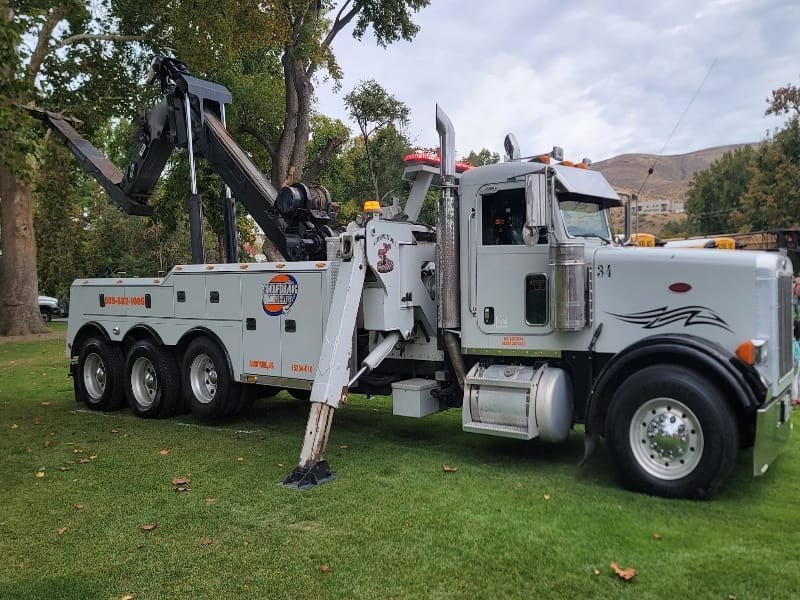
When a jackknife blocks lanes, we quickly read the layout, traffic flow, and load position, then set up a controlled pull and reset that stays predictable under pressure. On I-82 semi towing calls, we watch the tractor-trailer angle and shoulder conditions closely, since soft ground can drag the job out.
Jackknifes rarely follow a script, so we stay flexible and focus on clearing the hazard and getting the rig moving again. We handle I-82 semi towing for disabled tractors, trailer assistance, recovery support, and roadside help, then help drivers reposition off the travel lane and choose the next step, like a repair stop or tow to a shop. At 24 Hour Towing, our I-82 semi towing work sticks to the basics: arrive prepared, communicate clearly, and leave the scene in better shape than we found it.
FAQ
What is the first warning sign that a jackknife may be starting?
A small drift in the mirrors can be the earliest clue. You might notice the trailer tracking slightly off line, then the angle between tractor and trailer starts to grow. If the steering suddenly feels light or the trailer looks like it is trying to pass you, treat it as an urgent warning.
What should a driver do in the first second of a trailer swing?
Stay calm and avoid sharp inputs. Ease off heavy braking if conditions allow, keep your eyes up, and steer smoothly to re-center instead of snapping the wheel. Sudden steering or panic braking can increase the swing.
Why do empty or lightly loaded trailers jackknife more easily?
They have less downward force on the tires, so the trailer can lose grip sooner. Less weight on the trailer axles means less traction available during braking or quick corrections, especially on slick pavement.
How does downhill driving change jackknife risk?
Downhill grades add momentum, which increases stopping distance and makes weight shift forward faster. If you brake late on a grade, the trailer can keep pushing while traction drops, and the angle can build quickly.
What maintenance issues can raise the odds of a jackknife?
Tire condition, brake balance, and suspension wear all matter. Uneven braking, low tread depth, or underinflated tires can reduce grip and stability, especially during emergency stops or wet weather.
What information helps a towing or recovery team respond faster after a jackknife?
The safest details to share are your exact mile marker or nearby exit, whether anyone is injured, lane blockage status, and whether the trailer is loaded and with what type of freight. Mention hazards like leaking fluids, soft shoulder, or steep slope so the crew arrives prepared.