Lifting, Stabilizing, and Resetting Trucks After Major Incidents
A Pasco rotator service call usually starts with one question: what is still inside the truck, and how is that weight sitting? We see more overturned trailers than people expect around here. Especially during harvest season and on windy days out on the open stretches. On those days, our Pasco rotator service really comes in handy, because a standard tow truck would have just sunk trying to get close.
A rotator tow truck can swing its boom, lift from different angles, and keep the wrecker parked where the ground can hold it. That matters when the shoulder is soft, the trailer is twisted, or the load has shifted hard to one side.
What the Rotator Actually Does
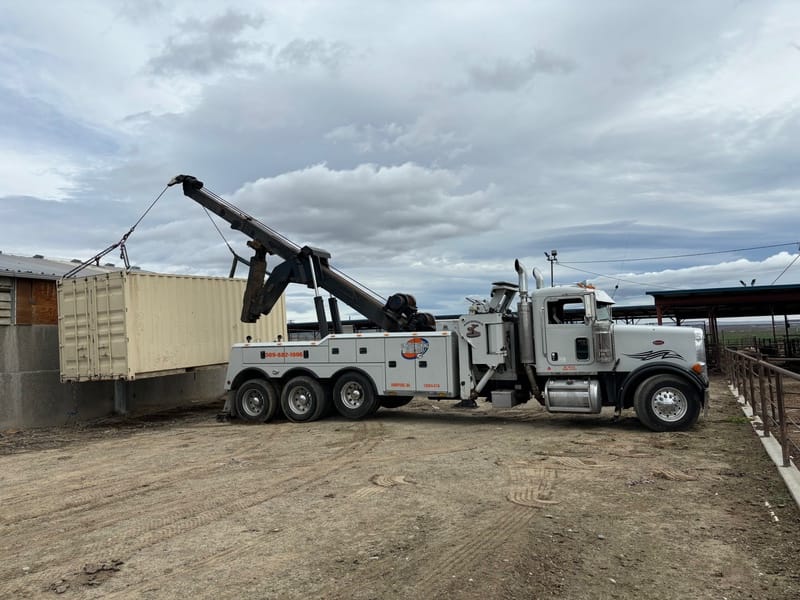
We use the rotator to control the lift instead of just dragging the truck over. Pulling too hard can tear up the trailer, spill cargo, or bend suspension parts that might still be usable.
Most jobs need a few steps before the big lift:
- Check fuel, oil, and cargo leaks
- Secure loose load
- Set outriggers on firm ground
- Rig chains or straps to strong points
- Lift slowly and watch the frame
Small movements count.
Heavy Lifts Are Often About Space
A lot of Pasco rotator service work happens in places that were never built for big recovery trucks. Loading docks, farm lots, warehouse yards, and narrow service roads can leave only a few feet to work with.
We have lifted containers, shifted machinery, moved heavy equipment, and helped with load transfers when forklifts could not reach. Pasco rotator service is useful because the boom rotates while the truck stays planted, which saves time in tight spots.
Why Overturned Truck Recoveries Take Patience
The fastest-looking recovery is often the one that took the most setup. On a tipped semi, we may spend 30 minutes just finding the right pull angle before anything moves.
Pasco rotator service is not about yanking a truck upright and hoping for the best. We watch the trailer roof, landing gear, axles, and cargo position the whole time. One rushed pull can turn a bad morning into a bigger mess.
24 Hour Towing Handles Pasco Rotator Service for Real Recovery Work
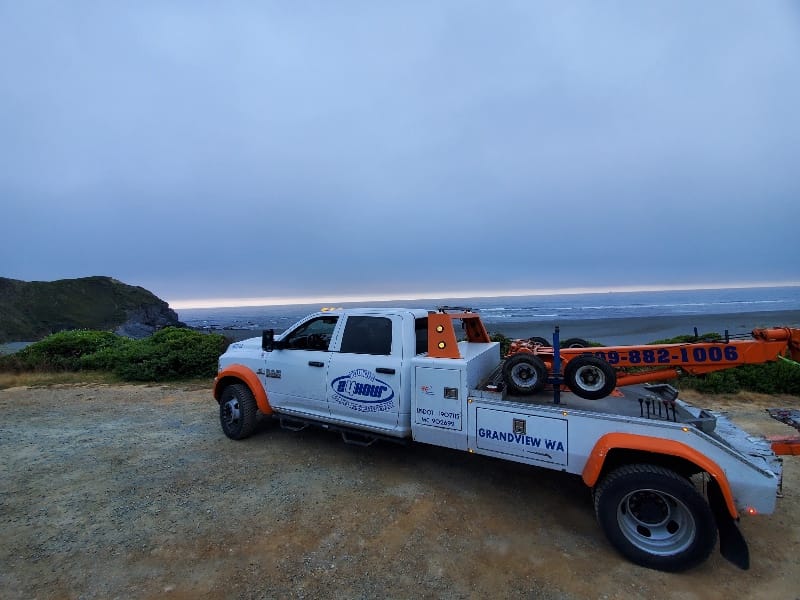
At 24 Hour Towing and Recovery, we handle Pasco rotator service for overturned semis, shifted loads, planned lifts, heavy equipment moves, and mobile crane work around Pasco, Sunnyside, and Eastern Washington. Our operators deal with tight yards, unstable shoulders, late-night wrecks, and jobs where traffic keeps moving a few feet away.
Pasco rotator service comes down to judgment, rigging, and knowing when to slow the job down. Around here, that might mean a frozen shoulder before sunrise, a loaded trailer near a warehouse dock, or a farm truck stuck where the gravel gives out after irrigation.
FAQs
How do you lift a fully loaded trailer without spilling the cargo?
We secure the load first if possible, or stabilize the trailer so it does not shift during the lift. The angle of the pull matters more than speed. Slow adjustments keep everything from sliding or tearing loose.
Can one truck handle a heavy recovery job on its own?
Sometimes yes, but not always. Heavier or awkward loads may require a second truck to balance the lift. It depends on weight, position, and ground conditions.
What kind of ground conditions make recovery harder?
Soft dirt, gravel, and wet shoulders can limit where we place the truck. Outriggers need solid footing to hold the weight during a lift. If the ground gives, the whole setup becomes unstable.
How long does it take to recover an overturned semi?
It can take anywhere from under an hour to several hours. Setup time often takes longer than the lift itself. Each job is different depending on load, damage, and access.
Is it possible to recover a truck in a tight space like a loading dock?
Yes, but it takes careful positioning. The boom can rotate while the truck stays in place, which helps in narrow areas. Planning the lift path is key before anything moves.
What happens if the trailer is too damaged to lift normally?
We may need to unload part of the cargo first. In some cases, we break the job into smaller steps to avoid more damage. The goal is to control the situation, not rush it.