When Inches and Pounds Decide the Route
We can move really big things, and the funny part is that “heavy tow” does not always mean a car or a broken-down semi. Sometimes it is an oversized machine that quit mid-job, a loaded container that needs a careful reposition, a piece of equipment that will not roll straight, or a long, awkward load that simply cannot fit the usual plan. I-82 heavy towing often starts with—drum roll—planning.
Plain numbers are needed to execute, because the road does not care how close it looks. . A few inches of extra height can turn a smooth route into a dead end, and a small weight shift can push an axle group into a limit nobody wants to argue about roadside.
The First Five Minutes of Planning Tell Us A Lot
A simple info list that saves time later:
- Overall height to the tallest point
- Rough gross weight
- Loaded, empty, or partly loaded
- Tire, axle, frame, or suspension damage
- Ground conditions like gravel, mud, shoulder, or soft dirt
- Room for the truck to back in, turn, and pull out
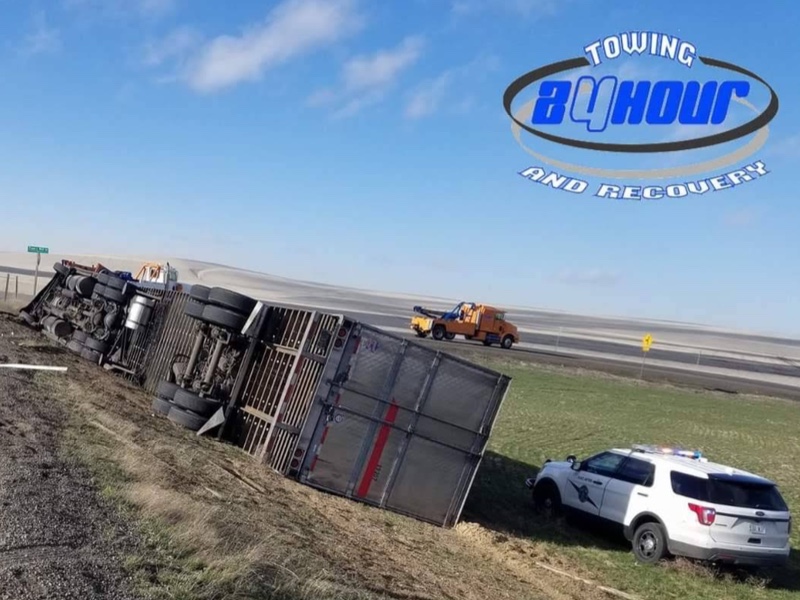
A dead excavator in a flat lot is one thing. A loaded concrete pump leaning into soft ground near an interstate shoulder is a completely different afternoon. We have had I-82 heavy towing jobs where the actual pull took twenty minutes, but the setup and route planning took two hours because the location boxed everything in.
Bridge Clearance: the Quiet Deal Breaker
Bridge clearance sounds obvious until somebody relies on a GPS route meant for pickup trucks. Around older industrial stretches off the I-82, there are overpasses that leave almost no margin once the road surface gets repaved a few times. We have seen loads scrape because the measurement looked fine on paper but the road dipped harder than expected right before the bridge.
That is why we build extra room into the route whenever possible. A move that technically clears by two inches is usually not something anybody enjoys doing in traffic with cars stacking up behind the convoy. I-82 heavy towing gets slower once height becomes part of the problem, and honestly, slower is usually better than rushed on these jobs.
Axle Weight and Permits: Legality Meets Physics
People focus on gross weight because it is the big number, but axle weight is usually where the real headache starts. One shifted load can throw too much weight onto a single axle group, especially after a breakdown or partial collapse. We had a forklift move last year where the machine sat crooked after a blown tire, and the weight balance changed enough that the original route no longer worked.
I-82 heavy towing permits are part paperwork, part logistics puzzle. Travel times, escort requirements, construction zones, bridge restrictions, county rules. Sometimes the approved route adds forty extra miles and there is not much point arguing with it. Getting stopped roadside with an overweight axle costs more time than the detour would have in the first place.
Professional I-82 Heavy Towing with 24 Hour Towing
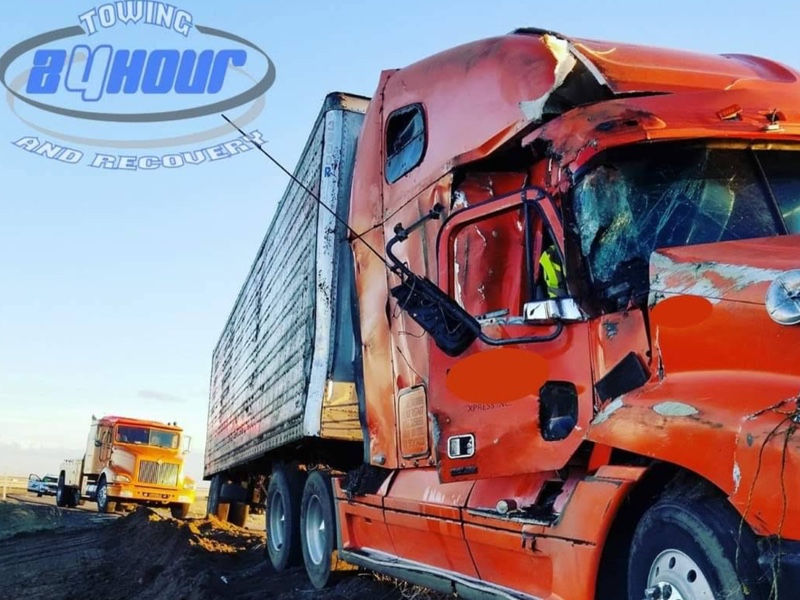
At 24 Hour Towing, most I-82 heavy towing calls start the same way. Somebody says the equipment looked fine that morning and now it is blocking a lane, buried in soft gravel, or sitting dead behind a warehouse with no room to work. The planning matters because once the truck shows up, there is usually very little space for mistakes.
Some jobs move smoothly. Others turn into long nights with traffic barrels, rain coming down sideways, and three different people measuring the same bridge twice because nobody trusts the first number. That is pretty normal with I-82 heavy towing. The difference between a manageable recovery and a complete mess usually comes down to the details people think are too small to mention at the beginning.
FAQs
What information should I have ready before calling for a heavy tow?
Have the vehicle type, approximate weight, overall height, and where it is sitting. If you can, share photos of the unit from the side and front, plus any visible damage. Also note if it is loaded, leaking, stuck, or blocking traffic, since that changes recovery needs.
How do towing teams estimate axle weight if there is no scale nearby?
We start with known weights from the equipment, the load description, and typical axle group ratings. Then we factor in where the load sits and how the tow setup will shift weight. If the move looks close to a limit, we plan for a route and setup that leaves a buffer instead of cutting it tight.
What is the biggest mistake people make with clearance concerns?
Relying on a guessed height or a spec sheet that does not match the real setup. Loads settle, suspension damage changes ride height, and add-ons can become the true high point. A quick measurement in the field prevents a long and expensive reroute later.
When do permits become necessary for a tow or recovery move?
Permits come into play when the combined setup exceeds legal limits for height, width, length, or weight. Some situations also require travel time restrictions or escorts, depending on the route and jurisdiction. A towing company can usually tell you this quickly once they know the key dimensions.
How long does permit coordination usually take?
It can range from same day to multiple days. It depends on the type of permit, the agencies involved, and any route restrictions. The fastest path is providing accurate measurements early so the permit request does not need revisions.
What should I do if the disabled vehicle is blocking a lane right now?
Call immediately and describe the hazard, then focus on safety. Turn on flashers, set reflective triangles if you have them and it is safe, and stay out of traffic lanes. If there is a fuel leak, fire risk, or injuries, contact emergency services first.